

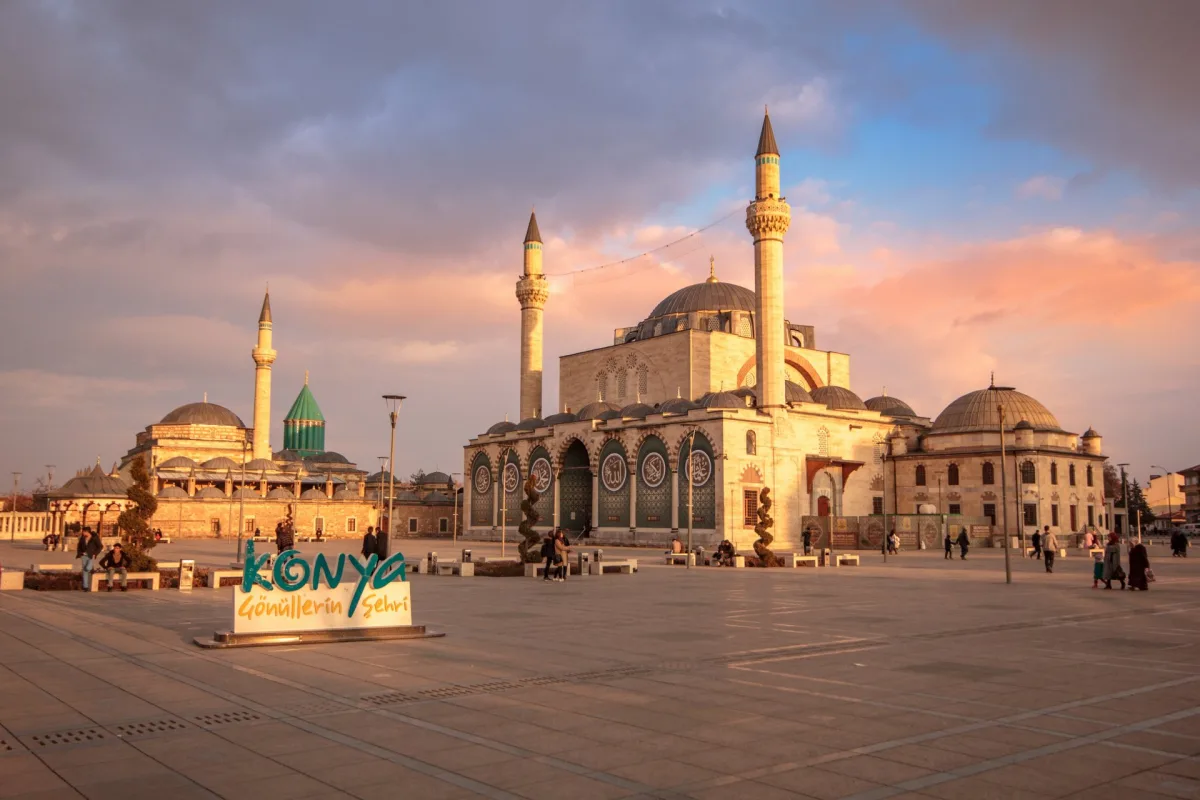
Konya Sightseeing Tour
Description
It is known that people have inhabited the region of Konya since 3000 years BC. Today over 2.1 million people live in the city and surrounds. The Seljuks conquered this area in the 11th century from the Byzantines and for over 4 hundred years it was the Capitol city of the Sultanate of Rum, a Turko-Persian state established in Anatolia.
Eventually, it was overthrown and taken by the Ottoman Empire in the 15th century where it remained for over 500 years until the War of Independence between 1919 and 1923 when it became part of modern-day Turkey.
The Konya of today is a beautiful and modern city that has wonderful links to the past in her history, landmarks and buildings, a magical place to visit.
Destinations Visited
- Mevlana Museum
- Aladdin Mosque
- Ince Minaret and Madrasa Museum
- Karatay Madrasah and Museum
- Aziziye Mosque
- Sahip Ata Museum Complex
- The Village of Sille and the Hagia Eleni Church
Tour Details
Starts In
Konya
Ends In
Konya
Group Size
Language Options
EN
Departure Days
Every Day
Tour Details
Today's full tour will start in the morning taking you to some important sites of this historical and spiritual place, halfway through the day we will stop for lunch which is included in the tour.
Mevlana Museum
The 13th-century Persian poet, theologian, Islamic scholar and Sufi mystic Mevlana Celaleddin-i Rumi is buried here at the Mevlana Museum the former home and lodge to the hauntingly beautiful order of the Whirling Dervishes the museum tour shows you the important area of the lodge including the Tombs, Ritual Hall, kitchens, and the Holy Tilavet Chamber which is where readings from the Quran are given and chanting takes place.
Aladdin Mosque
The historical city of Konya is laid out like a grid with all roads leading from a central circle and right in the middle of that is Aladdin Hill Park With its Mid 12th to 13th-century Mosque of the same name thought to be once part of the Seljuk Palace. It was built in the style of Islamic Seljuk architecture. Before this time there is evidence of a Christian basilica on this site dating back to 1080 when the city was captured.
Many changes were made and the façade we see today was built during the reign of Kaykaus 1 in 1219, within the mosque, the ebony Minbar (pulpit) was inscribed dating it to 1155, making this the first of this type of art to be found within this part of Turkey. Most visitors enter the mosque through the eastern door built in the Ottoman period, after leaving you will enter a courtyard where the dynasty of 8 Seljuk kings have been laid to rest.
Ince Minaret and Madrasa Museum
This 13th-century building also located in the heart of the city centre is now a museum displaying all forms of art made from wood and stoneworks, included in the museum you will find carved sculptures, relief work, panelling and much much more. The Minaret and main entrance are exquisitely carved and have withstood the winds and weathers of time.
Karatay Madrasah and Museum
All of the historical sites of Konya are centred around the Aladdin Mosque and the same goes for the Karatay Madrasah which lies just behind it to the north. The word Madrasah comes from Arabic and means any institution for education in this instance, Islamic. From the outside, it is a one storey unimposing building, however, it is when you enter that you immediately see the outstanding beauty and craftsmanship of the ceramics, there are also other ceramic works of art on display here. Many being discovered 80 kilometres away at the Kubadabad Royal summer palace.
Old Bazaar
The streets are crammed with stalls selling a huge selection from religious paraphernalia right through to clothing food and touristic souvenirs, a busy noisy place to visit where the sights sounds and smells will delight you. The mosque is in the same district as the Azizye Mosque and will lead you in the right direction.
Azizye Mosque
Located in the Karatay district of Konya again very close to the city centre the 17th-century Azizye Mosque will surprise you, is architecture is very different from anywhere else in the city in 1867 there was a great fire and most of the building was lost, however, Pertevniyel Mother of the sultan Abdulaziz had it completely rebuilt it took 7 years for work on the mosque to be completed and stands today as a testimony to her faith.
The Felt house
The significance of this versatile, natural and warm material can be seen here. The history of felt goes back over 2 and a half thousand years and there is evidence in the cities of Bogazkoy and Yazilikaya, where relief carvings have been found of cave walls depicting people wearing felt caps and clothes there were also fragments of ancient wool found. Later the Turkmens lived in traditional nomadic tents made from black and white wool representing wealth and poverty. On today's tour, you will see how felt is made.
Sahip Ata Museum Complex
Found just south of the main city centre this is not just one building but many that together are like a village, there is a dervishes lodge, mosque, tomb, double bath, fountain and shops.
Sahip Ata the man was a high ranking officer and advisor to the sultanate until his death in 1288. Now a museum that houses over 200 ethnographic items such as handwritten Qurans, carpets, candelabras, doors, in fact, a huge number of fascinating artefacts.
The Village of Sille and the Hagia Eleni Church
The charming village of Sille is located just 8 kilometres northwest of Konya city centre and is home to one of the worlds first monasteries to ever be built, history runs deep here. A village has been on this site for nearly 3 thousand years, home of the early Christians and one of the very few places that the Cappadocian Greek language was spoken up until 1922. Greeks had lived here peacefully alongside their Turkish brothers for over 800 years. The Hagia Eleni Church was built in Roman times by the Mother of King Constantine on her way to Jerusalem, passing through Sille she saw the beauty of the rock-carved churches that were already there and had the Hagie Eleni Church built in her name.
Your Local Expert
Farout Turkey
Turkey-Based Tour Operator · Since 2002
Tour Details
Today's full tour will start in the morning taking you to some important sites of this historical and spiritual place, halfway through the day we will stop for lunch which is included in the tour.
Mevlana Museum
The 13th-century Persian poet, theologian, Islamic scholar and Sufi mystic Mevlana Celaleddin-i Rumi is buried here at the Mevlana Museum the former home and lodge to the hauntingly beautiful order of the Whirling Dervishes the museum tour shows you the important area of the lodge including the Tombs, Ritual Hall, kitchens, and the Holy Tilavet Chamber which is where readings from the Quran are given and chanting takes place.
Aladdin Mosque
The historical city of Konya is laid out like a grid with all roads leading from a central circle and right in the middle of that is Aladdin Hill Park With its Mid 12th to 13th-century Mosque of the same name thought to be once part of the Seljuk Palace. It was built in the style of Islamic Seljuk architecture. Before this time there is evidence of a Christian basilica on this site dating back to 1080 when the city was captured.
Many changes were made and the façade we see today was built during the reign of Kaykaus 1 in 1219, within the mosque, the ebony Minbar (pulpit) was inscribed dating it to 1155, making this the first of this type of art to be found within this part of Turkey. Most visitors enter the mosque through the eastern door built in the Ottoman period, after leaving you will enter a courtyard where the dynasty of 8 Seljuk kings have been laid to rest.
Ince Minaret and Madrasa Museum
This 13th-century building also located in the heart of the city centre is now a museum displaying all forms of art made from wood and stoneworks, included in the museum you will find carved sculptures, relief work, panelling and much much more. The Minaret and main entrance are exquisitely carved and have withstood the winds and weathers of time.
Karatay Madrasah and Museum
All of the historical sites of Konya are centred around the Aladdin Mosque and the same goes for the Karatay Madrasah which lies just behind it to the north. The word Madrasah comes from Arabic and means any institution for education in this instance, Islamic. From the outside, it is a one storey unimposing building, however, it is when you enter that you immediately see the outstanding beauty and craftsmanship of the ceramics, there are also other ceramic works of art on display here. Many being discovered 80 kilometres away at the Kubadabad Royal summer palace.
Old Bazaar
The streets are crammed with stalls selling a huge selection from religious paraphernalia right through to clothing food and touristic souvenirs, a busy noisy place to visit where the sights sounds and smells will delight you. The mosque is in the same district as the Azizye Mosque and will lead you in the right direction.
Azizye Mosque
Located in the Karatay district of Konya again very close to the city centre the 17th-century Azizye Mosque will surprise you, is architecture is very different from anywhere else in the city in 1867 there was a great fire and most of the building was lost, however, Pertevniyel Mother of the sultan Abdulaziz had it completely rebuilt it took 7 years for work on the mosque to be completed and stands today as a testimony to her faith.
The Felt house
The significance of this versatile, natural and warm material can be seen here. The history of felt goes back over 2 and a half thousand years and there is evidence in the cities of Bogazkoy and Yazilikaya, where relief carvings have been found of cave walls depicting people wearing felt caps and clothes there were also fragments of ancient wool found. Later the Turkmens lived in traditional nomadic tents made from black and white wool representing wealth and poverty. On today's tour, you will see how felt is made.
Sahip Ata Museum Complex
Found just south of the main city centre this is not just one building but many that together are like a village, there is a dervishes lodge, mosque, tomb, double bath, fountain and shops.
Sahip Ata the man was a high ranking officer and advisor to the sultanate until his death in 1288. Now a museum that houses over 200 ethnographic items such as handwritten Qurans, carpets, candelabras, doors, in fact, a huge number of fascinating artefacts.
The Village of Sille and the Hagia Eleni Church
The charming village of Sille is located just 8 kilometres northwest of Konya city centre and is home to one of the worlds first monasteries to ever be built, history runs deep here. A village has been on this site for nearly 3 thousand years, home of the early Christians and one of the very few places that the Cappadocian Greek language was spoken up until 1922. Greeks had lived here peacefully alongside their Turkish brothers for over 800 years. The Hagia Eleni Church was built in Roman times by the Mother of King Constantine on her way to Jerusalem, passing through Sille she saw the beauty of the rock-carved churches that were already there and had the Hagie Eleni Church built in her name.
Tour Details
Starts In
Konya
Ends In
Konya
Group Size
Language Options
EN
Departure Days
Every Day
Your Local Expert
Farout Turkey
Turkey-Based Tour Operator · Since 2002