

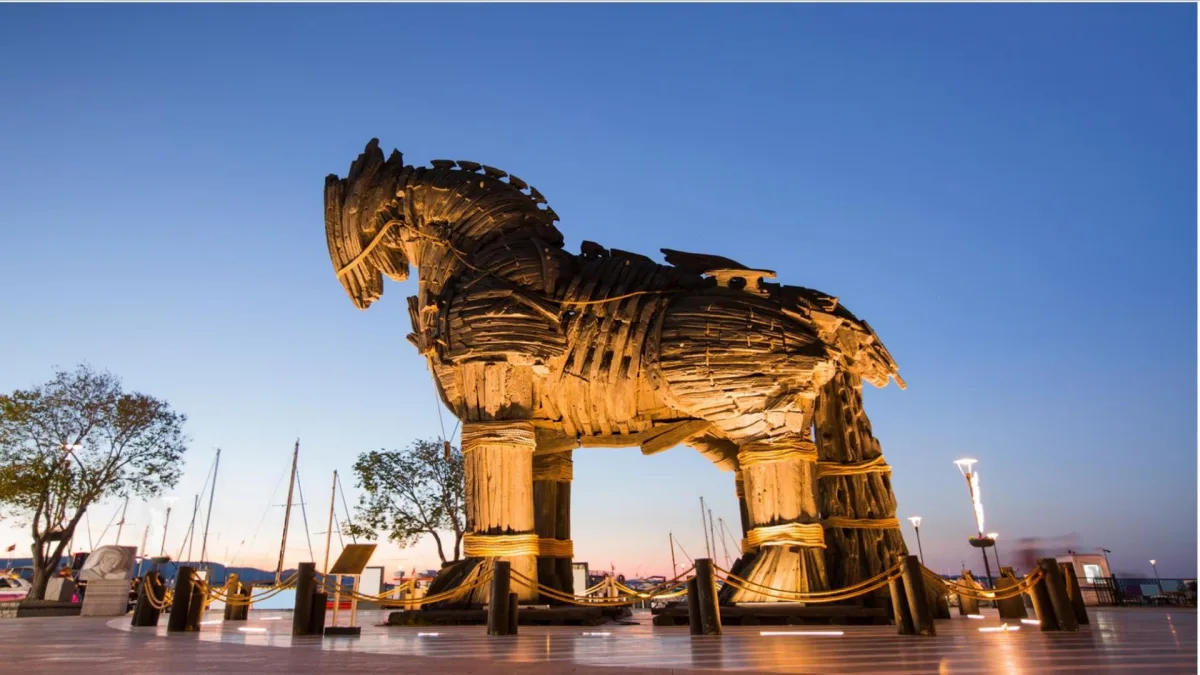
Troy Tour From Canakkale Port
Description
Upon docking at the port of Canakkale City ( Kepez Port ), your private local guide will greet you with a sign bearing the name of your party at the main entrance of the port.
A 30-minute smooth drive to The Legendary City of Troy or Ilion or Ilios or Wilusa.
On The way, the guide will explain the mythology surrounding Troy, the Trojan Horse, and Helen of Troy while you are enjoying the beautiful view of The Dardanelles and the countryside.
First, we will make a short visit to Tevfikiye OPET Archeo-Village, The Village was declared an Archeo Village by the authority in 2018. Here you will have a chance to talk with the locals and enjoy a small glass of tea at the local tea house. We will see the head statues of The Greek and The Trojan warriors including the HOMER, the author of the Iliad and the Odyssey.
The guide will also talk about the history and discoveries of the archaeological excavations, from its discovery by Heinrich Schliemann in the 1870s to the present day.
Nine cities have been discovered, built one on top of the other, dating back to 3500 B.C.
During the tour, we will seek answers to the following questions.
Who was Helen of Troy?
Was she the real cause of the Trojan Wars or was it the economy?
Did the wooden horse exist?
What is happening with the current excavations?
You will learn the answers to these and many other questions.
Tour Details
Starts In
Canakkale
Ends In
Troy
Group Size
Language Options
EN, ES
Departure Days
Every Day
Tour Details
Highlights
Meet the locals, The real Trojans in nearby villages.
Get lost in the ancient history.
Learn about the first beauty contest.
Enjoy the beautiful view of Hellespont.
Feel The Boreas Wind of Windy Troy.
Sights Visited:
The Trojan Horse
The wooden horse is briefly mentioned only in The ODYSSEY. ( War Trick )
1. Odyssey
It was left behind as an offering to The Goddess ATHENA by The GREEKS.
2. Austrian Prof. Schachermery and Turkish Prof. Ekrem Akurgal said
The wooden horse was an offering to The God Poseidon ( Earthshaker and God of the Sea )
The City walls defended Troy for 10 years and were then destroyed by a violent earthquake The Greeks attacked Troy and conquered it. The Greeks thought that Poseidon had helped them.
3. Michael Wood
The wooden horse might have been built as a battering ram to destroy the walls.
This theory was inspired by an ASSYRIAN relief and seems logical.
The Achaean soldiers tried several times to climb the sloping walls but could not climb the vertical part which was made of mud-brick.
A horse-like battering ram could well have been used against this weak part of the Wall.
4. A wooden tank-like horse could have been used as a big shield to approach the walls
5. A moveable tower from which soldiers jumped on the walls.
Pithos Garden, Terracotta Water Pipes, Grinding Stones, Hand Mills
Eastern Wals of Troy VI, The Tower of Troy VII, The Outer Court Wall of The Temple of ATHENA ( Temenos )
East Gate of Troy VI
Palace Houses of Troy VI
North East Bastion of Troy VI
Great Theater (Troy VIII/IX) 400 B.C. 6000 seating capacity ( not excavated yet )
Temple of Athena
Ceiling Blocks of The Temple of Athena
The Platform of The Temple of Athena
Citadel Wall of Troy II (2500-2200 BC Schliemann's "burnt city")
Megaron House
Fortification Wall of Troy I
Schliemann's Trench
Various Layers of Troy
The Ramp of Troy II
The Palace Building of Troy VI M
Sanctuary
The Lower City of Ilios or Wilusa
Kaskal Kur, The Cave
The Roman Bath
Odeion
South Gate and The South Tower
Bouleuterion or Portico
After The Ancient City of Troy, we will take you to the beautiful Museum of TROY.
TROY MUSEUM
The museum is situated at the entrance of the Ancient City of Troy. It has 11,200 square metres of total indoor area of which 3,000 square metres is the exhibition space. The museum’s exhibit starts as you walk down the ramp. The alcoves along the ramp contain tombstones, large sculptures, animations, and oversized photographs that depict the various layers of Troy. The museum presents Troy City’s excavation layers, the excavation history, and the findings from the Troas region, aided by interactive elements. The Treasures of Troy gold section, Roman sculptures, and Polyxena Sarcophagus are some of the prominent artifacts in the museum. The open terrace at the top floor offers magnificent views of the land of Homer and the Dardanelles. You can also appreciate the stunning panorama of Troy National Historical Park and the Culture Route from here.
While visiting the museum, visitors follow a story divided into seven titles:
1. Archaeology of Troas Region
2. Bronze Age of Troy
3. Iliad Epic and Trojan War
4. Troas and Ilion in Antiquity
5. Eastern Roman and Ottoman Period
6. Archaeology History
7. Traces of Troy.
The visit to the museum begins when descending the ramp. In the niches on the walls of the ramp, the different layers of Troy are described with tombstones, large sculptures, stage animations, and large photographs. Archaeology, archaeological, and dating methods, such as "neolithic, chalcolithic, bronze age, iron age, mound, restoration, conservation", to provide an orientation to the visitor before the ongoing exhibition floors in the circulation band, which is the entrance area of the museum, is about Troas and its surroundings. Terms are conveyed through diagrams, illustrations, texts, and interactive methods.
P.S. Subject to availability we will call the local ice cream man who delivers his homemade ice cream made of goat milk with his motorbike.
From
€223 / person
€340Your Local Expert
Farout Turkey
Turkey-Based Tour Operator · Since 2002
Tour Details
Highlights
Meet the locals, The real Trojans in nearby villages.
Get lost in the ancient history.
Learn about the first beauty contest.
Enjoy the beautiful view of Hellespont.
Feel The Boreas Wind of Windy Troy.
Sights Visited:
The Trojan Horse
The wooden horse is briefly mentioned only in The ODYSSEY. ( War Trick )
1. Odyssey
It was left behind as an offering to The Goddess ATHENA by The GREEKS.
2. Austrian Prof. Schachermery and Turkish Prof. Ekrem Akurgal said
The wooden horse was an offering to The God Poseidon ( Earthshaker and God of the Sea )
The City walls defended Troy for 10 years and were then destroyed by a violent earthquake The Greeks attacked Troy and conquered it. The Greeks thought that Poseidon had helped them.
3. Michael Wood
The wooden horse might have been built as a battering ram to destroy the walls.
This theory was inspired by an ASSYRIAN relief and seems logical.
The Achaean soldiers tried several times to climb the sloping walls but could not climb the vertical part which was made of mud-brick.
A horse-like battering ram could well have been used against this weak part of the Wall.
4. A wooden tank-like horse could have been used as a big shield to approach the walls
5. A moveable tower from which soldiers jumped on the walls.
Pithos Garden, Terracotta Water Pipes, Grinding Stones, Hand Mills
Eastern Wals of Troy VI, The Tower of Troy VII, The Outer Court Wall of The Temple of ATHENA ( Temenos )
East Gate of Troy VI
Palace Houses of Troy VI
North East Bastion of Troy VI
Great Theater (Troy VIII/IX) 400 B.C. 6000 seating capacity ( not excavated yet )
Temple of Athena
Ceiling Blocks of The Temple of Athena
The Platform of The Temple of Athena
Citadel Wall of Troy II (2500-2200 BC Schliemann's "burnt city")
Megaron House
Fortification Wall of Troy I
Schliemann's Trench
Various Layers of Troy
The Ramp of Troy II
The Palace Building of Troy VI M
Sanctuary
The Lower City of Ilios or Wilusa
Kaskal Kur, The Cave
The Roman Bath
Odeion
South Gate and The South Tower
Bouleuterion or Portico
After The Ancient City of Troy, we will take you to the beautiful Museum of TROY.
TROY MUSEUM
The museum is situated at the entrance of the Ancient City of Troy. It has 11,200 square metres of total indoor area of which 3,000 square metres is the exhibition space. The museum’s exhibit starts as you walk down the ramp. The alcoves along the ramp contain tombstones, large sculptures, animations, and oversized photographs that depict the various layers of Troy. The museum presents Troy City’s excavation layers, the excavation history, and the findings from the Troas region, aided by interactive elements. The Treasures of Troy gold section, Roman sculptures, and Polyxena Sarcophagus are some of the prominent artifacts in the museum. The open terrace at the top floor offers magnificent views of the land of Homer and the Dardanelles. You can also appreciate the stunning panorama of Troy National Historical Park and the Culture Route from here.
While visiting the museum, visitors follow a story divided into seven titles:
1. Archaeology of Troas Region
2. Bronze Age of Troy
3. Iliad Epic and Trojan War
4. Troas and Ilion in Antiquity
5. Eastern Roman and Ottoman Period
6. Archaeology History
7. Traces of Troy.
The visit to the museum begins when descending the ramp. In the niches on the walls of the ramp, the different layers of Troy are described with tombstones, large sculptures, stage animations, and large photographs. Archaeology, archaeological, and dating methods, such as "neolithic, chalcolithic, bronze age, iron age, mound, restoration, conservation", to provide an orientation to the visitor before the ongoing exhibition floors in the circulation band, which is the entrance area of the museum, is about Troas and its surroundings. Terms are conveyed through diagrams, illustrations, texts, and interactive methods.
P.S. Subject to availability we will call the local ice cream man who delivers his homemade ice cream made of goat milk with his motorbike.
Tour Details
Starts In
Canakkale
Ends In
Troy
Group Size
Language Options
EN, ES
Departure Days
Every Day
From
€223 / person
€340Your Local Expert
Farout Turkey
Turkey-Based Tour Operator · Since 2002